
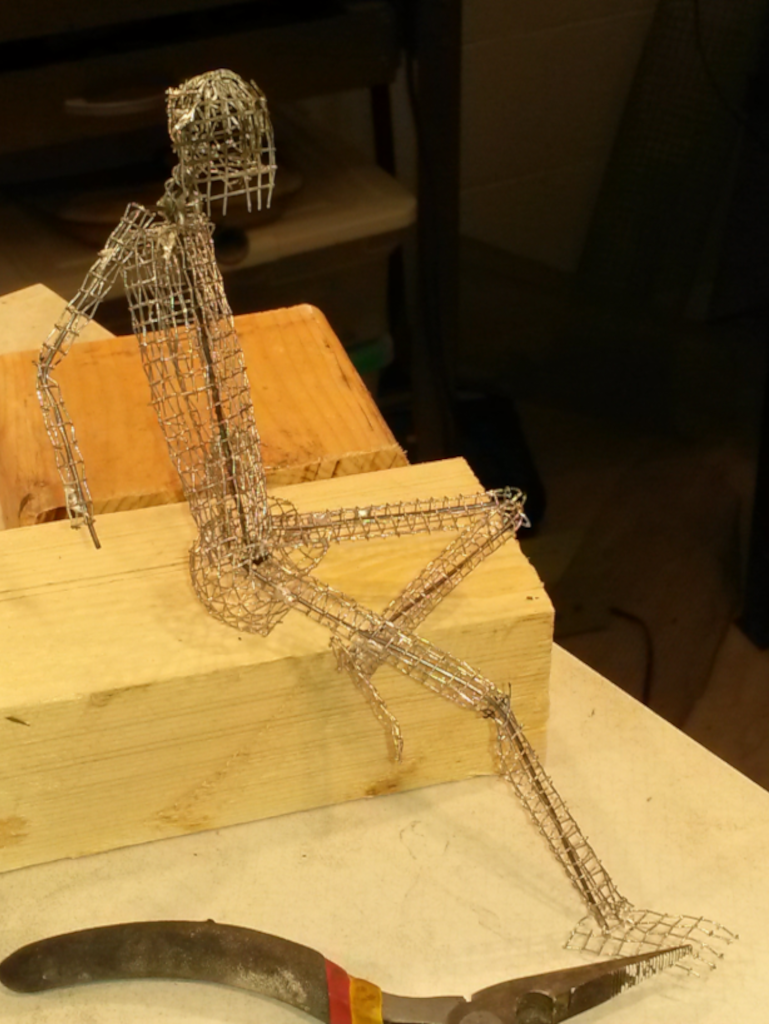
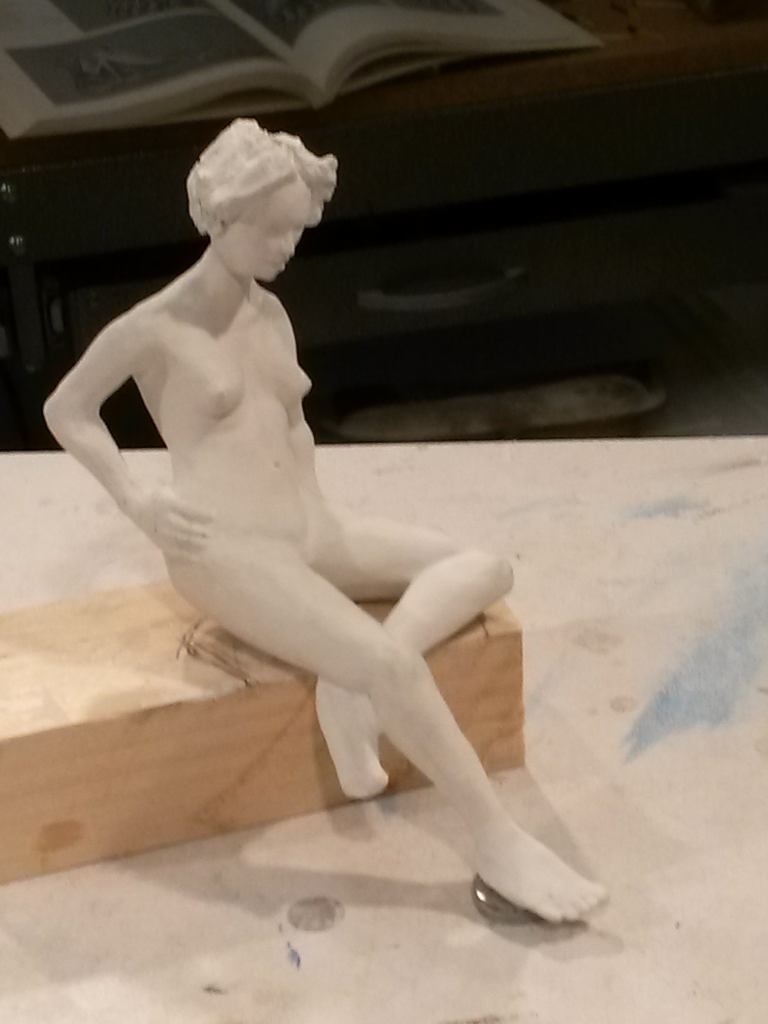
To make sculpture directly in cement, the sculptor first makes an armature to support the cement, which is soft and will not hold shape until it has set. The armature can be thought of as a the skeleton of the piece.
Cement is then troweled over the armature, pressing cement deeply into all areas of this skeleton. Just like the skeleton of a living person, the armature skeleton of the sculpture is internal. The artist must take this into consideration when designing the armature so that the "bones" do not poke out and show though the finished piece.
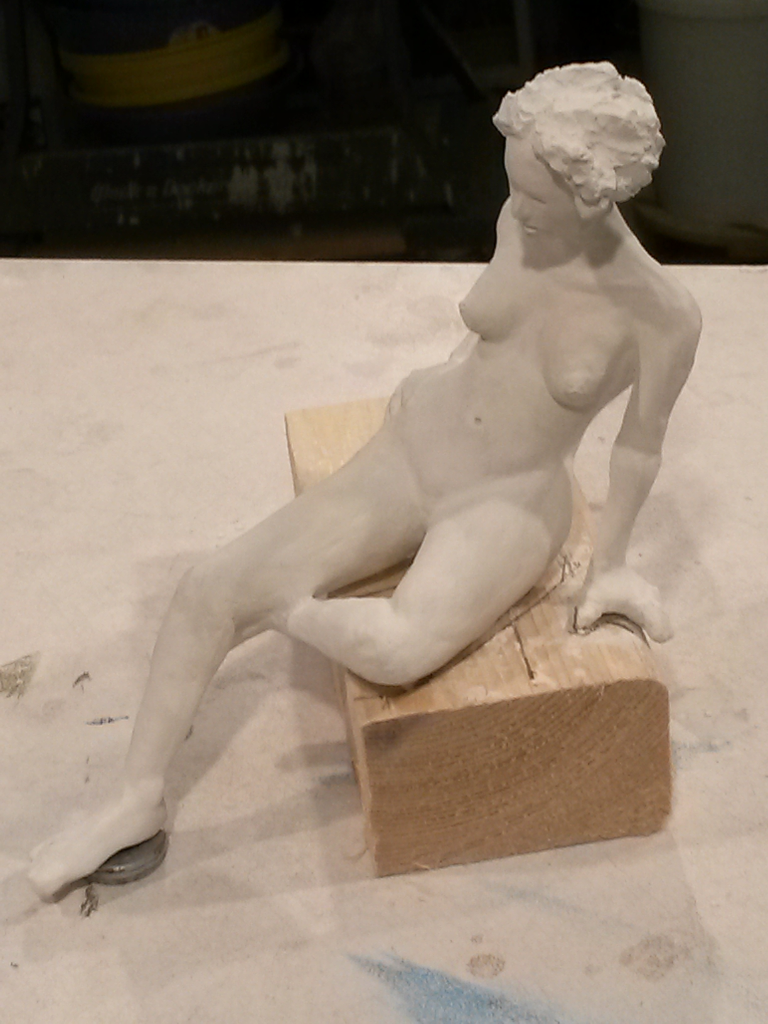
The sculptor models the shape while adding cement to the armature. Final shaping is done once the cement has set, using files, chisels,and grinders. This process of adding and subtracting and shaping may be carried through several iterations.
The best armatures for working with cement are made from steel. Cement and steel were made for each other because they both expand at the same rate. If the internal structure of the armature expands at a different rate than the outside of the sculpture, it will eventually crack because of the stresses produced. This is also true in modern construction where steel and iron framework reinforces the concrete used.
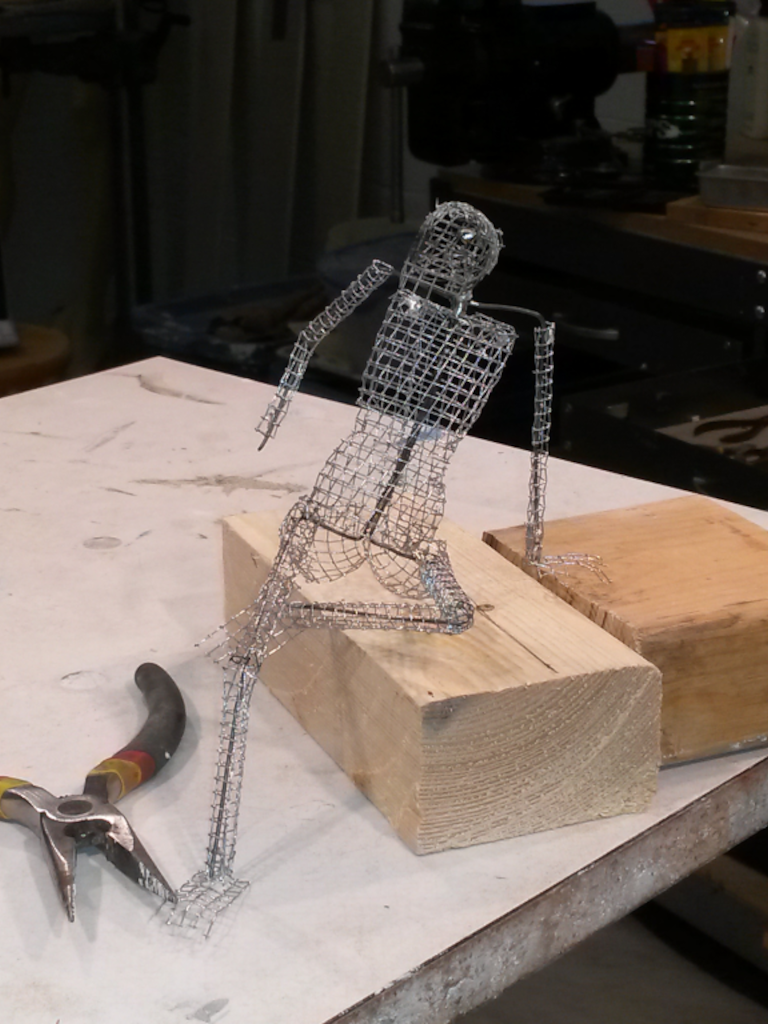
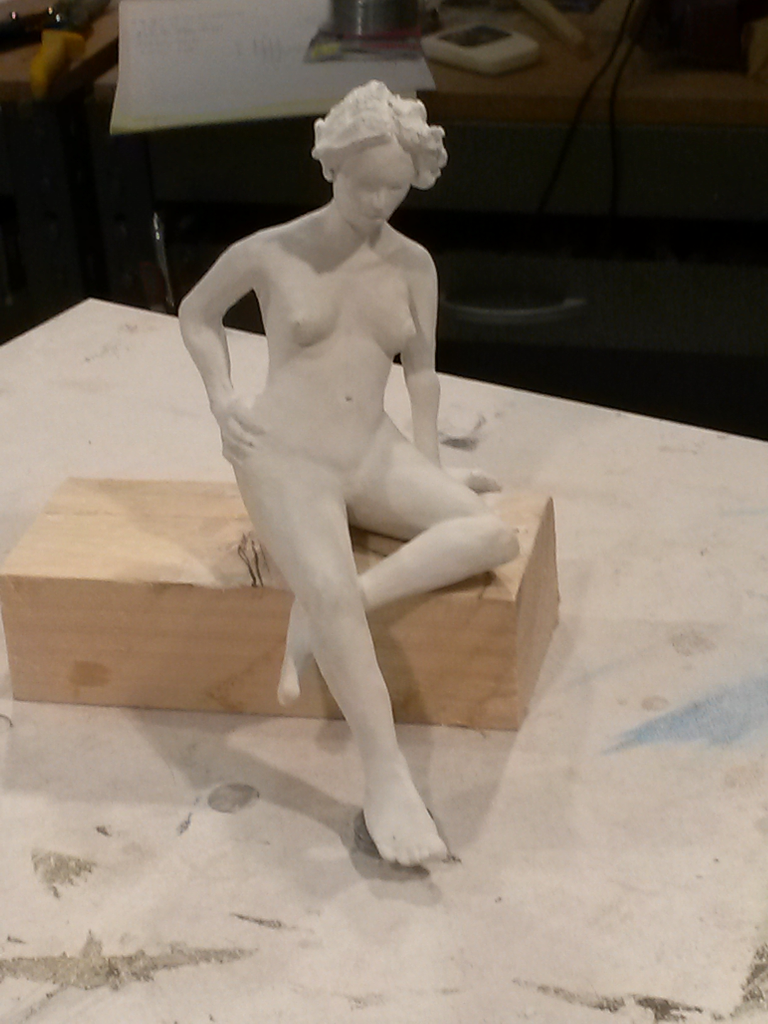
The cement used here is white cement, which is a refined version of gray portland cement. The gray color is caused by aluminum compounds which are removed to produce the white variety.
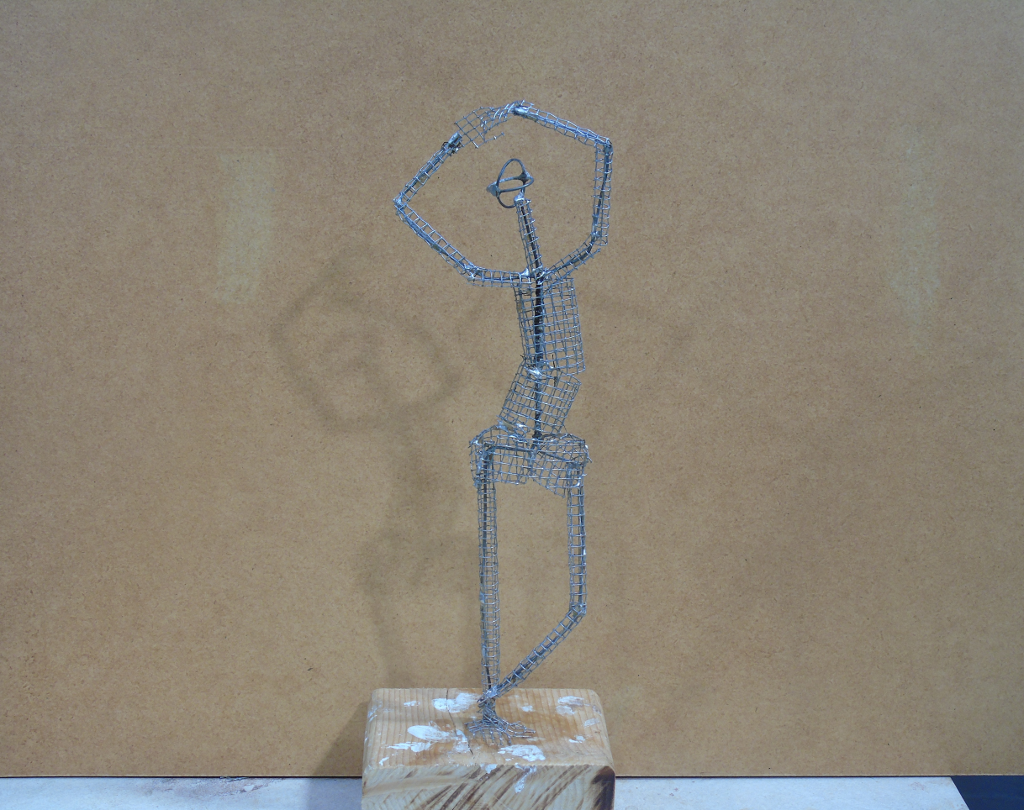
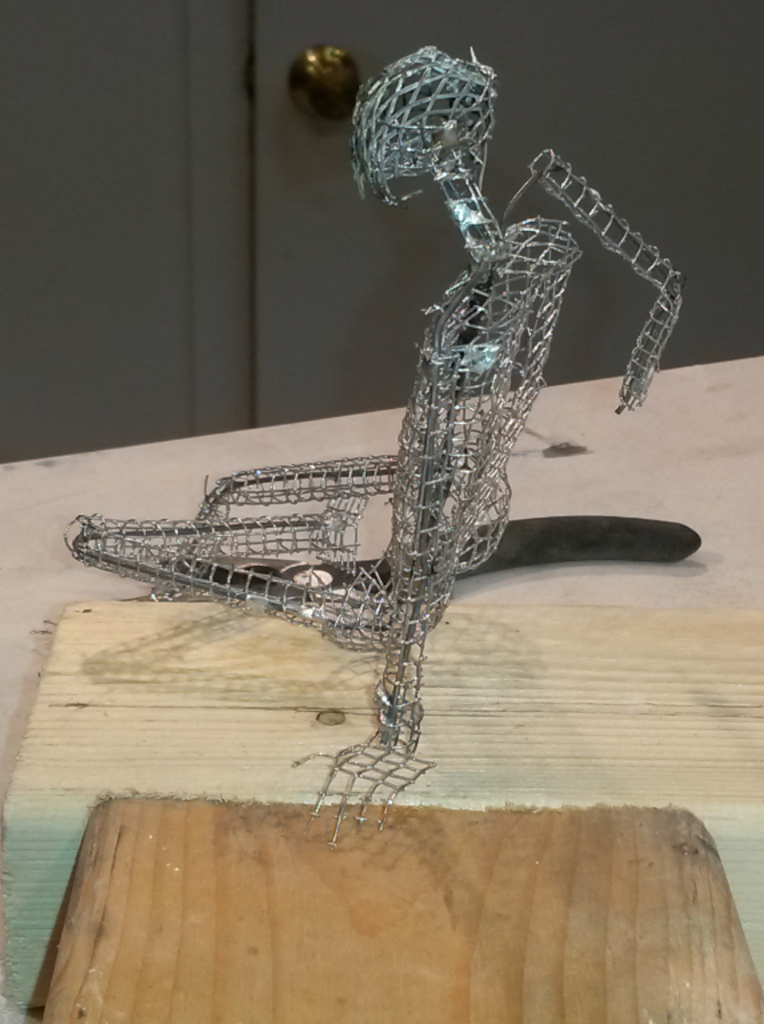
This is another example of an armature.
Note the shadow and how, in this case, it predicts the final shape of the finished sculpture.